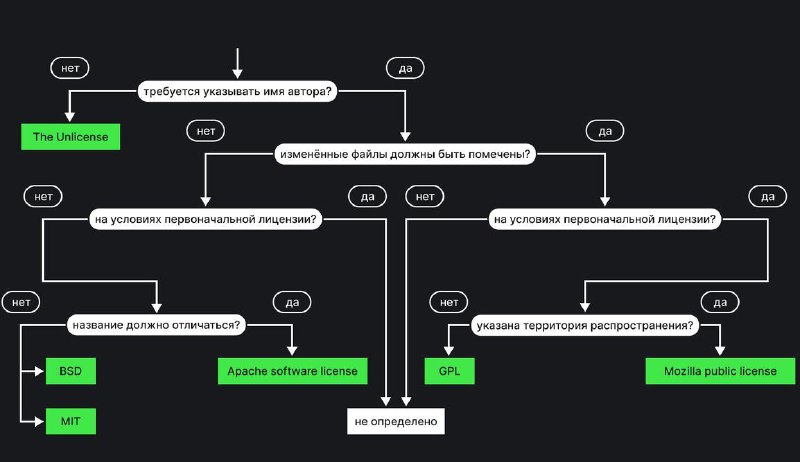
🤔 Licensing: free and proprietary
We looked at what copyright is (subjects, objects, etc.). In the post I made a footnote about the MIT license, let's see what types of licenses there are and why it is important for us to understand them, in order to make our own custom products and how to learn how to use all the cool features that come with it.
Proprietary licenses:
This is the most restrictive type, protecting the developer or owner from unauthorized use of the software. The source code in this case usually remains closed and may be classified as a trade secret. Types: one-time fee, subscription, shareware with additional purchase of functionality extensions.
Principles:
- Restriction on commercial use of the software
- Restriction on software distribution
- Restriction on studying and modifying software
By volume they are distinguished:
- OEM licenses (supplied with the equipment)
- Single-user licenses
- Multi-user licenses
- Corporate licenses (for organizations)
Free licenses:
This is a subject of copyright, where the manufacturer/author wishes that their programs be distributed and used freely and without restrictions. That is, these are license agreements that clearly formulate the following principles of free software: run the software for any purpose, study the work of the program and adapt it to your needs, create and distribute copies of the program, improve the program and publish improvements.
Types:
- Permissive (permissive)
- Strong Copyleft Licenses
- Weak Copyleft Licenses
- The Unlicense (licenses for transferring code to the public domain)
Total: we will next look at specific types of licenses and their distinctive features from each other, but for now I have attached a simple trick to the post to distinguish between approaches to choosing licenses.
#toolchain #licenses